

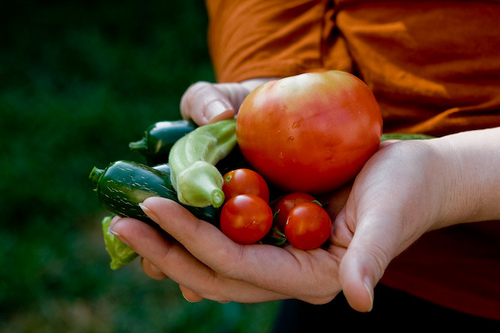
Of, course I’m referring to vegetables. For the past three years, I’ve been on a quest to be more observant about what I eat. The first stage was phasing out fast food. Phase II consisted of understanding nutrition labels and pronouncing words like maltodextrin, sodium phosphate, potassium chloride and other mumbo jumbo I never realized was going into my body.
I have made Phase III learning how to pick produce at the grocery store. In a perfect world I would run 5 to 10 miles at the crack of dawn, go home, eat breakfast, shower up and drive straight to the farmer’s market to purchase fresh produce for lunch and dinner. But I don’t live in a perfect world. Therefore, I have to stock up on items at the grocery store.
While growing up, a trip to the Dallas Farmer’s Market was a weekend family event. My mother, father, and I would load up in the family vehicle (a beat up pick up truck) to drive to the farmer’s market where we would meet farmers from Texas, Oklahoma, northern Louisiana, and other places. You would think that years of visiting the farmer’s market, I would be a pro at picking produce right? I would if I had paid attention. While my mom was picking, pinching, smelling, and groping vegetables I was busy running around stealing peanuts from the peanut farmer’s display and following my dad.
In addition to missing out on some awesome mother/daughter bonding time, I missed out on how to pick fresh, ripe, or good produce. I recently came across an article on thekitchen.com. I hope this helps you as much as it has helped me.
• Artichokes: Choose globes that have tight leaves and feel heavy for their size. The leaves should squeak when pressed against each other.
• Asparagus: Choose firm, smooth, and brightly-colored stalks with compact tips. Avoid limp stalks. Choose stalks of equal thickness to ensure even cooking times.
• Avocados: Choose avocados that feel slightly soft to the touch. Firmer avocados may be ripened at home, but avoid rock-hard ones. Also avoid avocados with cracks or dents.
• Beets: Choose firm beets with fresh stems and slender taproots. Avoid beets with wilted leaves, scaly tops, or large, hairy taproots as they may be older and more woody.
• Bok Choy: For mature bok choy, look for dark green leaves and bright white stalks. Baby bok choy should be light green in color.
• Broccoli: Choose broccoli with firm stalks, tight florets, and crisp green leaves. Avoid yellowed or flowering florets.
• Brussels Sprouts: Choose firm, compact, bright green heads. Avoid sprouts with wilted or loose outer leaves.
• Cabbages: Choose firm, compact heads that feel heavy for their size. Check that the stems are also fresh and compact.
• Carrots: Choose firm, smooth carrots without rootlets.
• Cauliflower: Choose heads with tightly packed, creamy white florets. Avoid yellowed, spotted, or flowering florets.
• Celery: Choose firm, unblemished stalks. The stalks and leaves should be green, not yellow.
• Celery Root: Choose firm, hard roots that feel heavy for their size. Any attached leaves should be fresh and green.
• Corn: Choose corn with bright green husks and moist but not slimy silk. Peel back the husk to ensure the kernels are plump and not dry.
• Cucumbers: Choose cucumbers that are uniformly green (not yellow).
• Eggplants: Choose eggplants that have smooth, naturally shiny skin and feel heavy for their size. When gently pressed, flesh that gives slightly and then bounces back indicates ripeness. Unripe flesh will not give, while overripe flesh will remain indented. Also, smaller eggplants tend to have fewer seeds and be less bitter.
• Fennel: Choose fennel with white, firm, unblemished bulbs as well as firm stems and fresh leaves.
• Garlic: Choose firm, plump heads. Avoid heads with soft spots or green sprouts.
• Green Beans: Choose slender beans that snap rather than bend. Avoid bulging or dried pods.
• Jerusalem Artichokes: Choose smooth, firm tubers. Avoid those with green spots or sprouts.
• Kale: Choose crisp, deeply-colored leaves. Avoid yellowed leaves. Smaller leaves tend to be more tender.
• Leeks: Choose firm leeks with tightly-rolled tops. Slender leeks tend to be younger and more tender, while larger ones with rounded bulbs tend to be older and more woody.
• Lettuce, Spinach, and Other Leafy Greens: Choose greens with fresh, crisp leaves. Avoid any that are wilted or slimy.
• Onions and Shallots: Choose dry, firm bulbs that feel heavy for their size. Avoid any with soft spots or green sprouts.
• Parsnips: Choose firm, ivory-colored roots. Large roots may be fibrous, so choose small and medium ones for better texture and flavor.
• Peas: Choose crisp, green pods. Avoid bulging, dried, yellow, or white pods.
• Peppers: Choose firm, naturally shiny peppers that feel heavy for their size.
• Potatoes: Choose firm, smooth potatoes. Avoid those with bruises, green spots, or sprouts.
• Radishes: Choose radishes with fresh, green tops and firm, unblemished roots.
• Rhubarb: Choose firm pink or red stalks. Green stalks tend to be stringy and sour.
• Rutabagas: Choose rutabagas that feel firm and heavy for their size. Avoid any with holes or bruises.
• Scallions: Choose scallions with crisp, green tops and firm, white bulbs. Avoid wilted or browned scallions.
• Summer Squash: Choose squash with naturally shiny, taught, unblemished skin. Avoid squash that appear dull or have soft spots.
• Sweet Potatoes and Yams: Choose potatoes with firm, unwrinkled skins and no bruises or cuts, as they are highly perishable.
• Swiss Chard: Choose chard with crisp stalks and shiny, bright, unwilted leaves.
• Tomatillos: Choose green tomatillos with green husks. Avoid yellow fruits with brown husks.
• Tomatoes: Choose tomatoes that are fragrant, smell earthy at the stem end, and feel heavy for their size. Avoid tomatoes with wrinkled skins.
• Turnips: Choose turnips that feel firm and heavy for their size. Smaller turnips tend to be sweeter and more tender than larger ones, which may be woody.
• Winter Squash: Choose squash that have stems intact and feel heavy for their size. Avoid squash with cuts or soft spots.
So what do you think? Are there any tricks or tactics you use in picking good veggies? Was this blog post helpful? I’d really like your feedback.
Love, Peace, and Sweat,
Monisha R.
Monisha Randolph is a RRCA Certified Distance Running Coach and the author of Runner’s Revelations: How Running Changed My Walk. To learn more about Monisha or to purchase a copy of her book please visit www.runnersrevelations.com. Feel free to follow her on Twitter and join her Fan Community on Facebook.
Tags: Monisha's Minute, Vegetarian Recipes
 Tweet this!
 Digg it!
 Add to Delicious!
 Share on Facebook!
 Share on Reddit!
 Stumble it


3 Comments
Thank you so much for this list! I love the details. Also, I’m having trouble with storing my fruits and vegetables. Do you have any tips for keeping them as fresh as possible?
One thing I take into consideration when buying veggies is if its organic or not. Most vegetables that are not organic are genetically altered to handle a longer shelf life. If you are into purchasing organic veggies, I recommend having a meal in mind. Just buying something and letting it sit can lead to food spoilage.
In regards to food storage, I don’t like to cover my fruit. I leave it in a fruit bowl. In regards to storing vegetables, there is a type of plastic that some stores use now that allegedly preserves fresh produce longer. There’s also an item called Fenugreek Paper that has been proven to keep produce fresh longer. A fun fact about Fenugreek paper is it was invented by a teenager!
I hope this info helps!
[...] received some email and texts that the How To Pick Good Veggies post was very helpful. This week I decided I shouldn’t leave fruit [...]